
Initial Inspection
Our trained technicians will inspect your home or business to locate any wasps including yellow-jackets or hornets present or potential pest entry points. If they are solitary wasps, we can most likely move onto treatment. If Yellow-jackets or Hornets are present, we will need to locate the nest using specialized equipment, and directly treat and/or remove for control depending on size, location and time of season.

Wasp & Hornet Monitoring/Baiting
In rare circumstances there may be an established colony in hard to access areas requiring the use of attractants to locate and or help control the population. Pest Control WV has bait options available to help work to eliminate even the toughest Stinging Insect infestations in hard to access areas if necessary. We have a variety of preferred baits at our disposal in order to prevent resistance, and ensure the colony accepts the bait.

Treatment and/or Nest Removal
When we have determined the presence of stinging insects in a certain location that is accessible, we will perform spot treatments if applicable by flushing the pests out of hiding to determine the level of infestation and other possible infestation areas. If the pests located are social such as Yellowjackets or Hornets, we will determine is the nest needs to be removed to prevent further damage or pest activity or if it can be solely treated.

Pest Proofing & Prevention Assessment
Neighborly Pest Control will ensure all the solitary wasps nests are knocked down and the social nests are removed if applicable. We will then perform a Pest Assessment, and provide you with details of how to prevent a stinging insect infestation in the future if applicable, and what other pest entry points or conducive conditions we may have found around the exterior of the structure.
Yellowjacket Control/Prevention for Your Home & Business
Yellowjackets in the home are never a good sign. Since there are a few different species of wasps and hornets local to our area, we always like to schedule a Free Inspection in order to identify the species and provide the following steps for elimination.
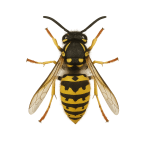
Yellowjackets (Vespula spp.): Small, fast-flying, bee-sized insects with distinct black and yellow bands. They are highly aggressive, especially in late summer, and often nest in the ground, wall voids, or under structures. Common species include German and Aerial yellowjackets.
YELLOWJACKET CONTROL IN WEST VIRGINIA
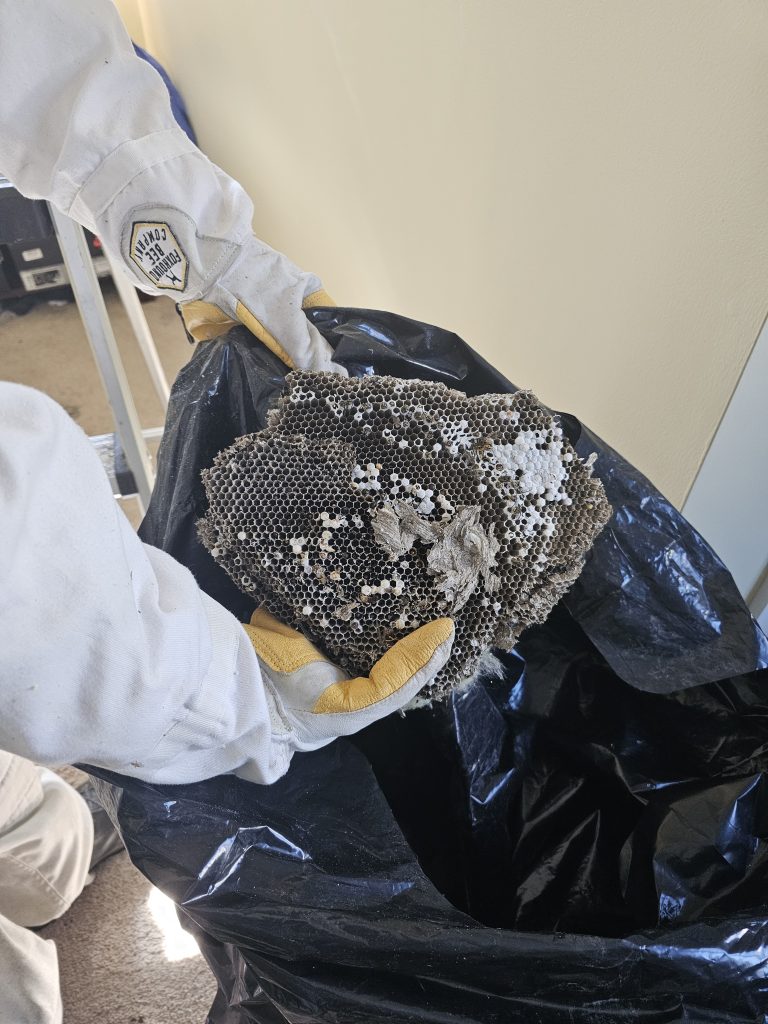
Yellowjackets are responsible for more human stinging incidents each year than any other stinging insect in North America. In West Virginia, they are a peak-season hazard from August through October, when colonies reach maximum size and workers become increasingly aggressive as their food sources decline. Ground nests, wall voids, and attic spaces are the most common — and most dangerous — locations for yellowjacket colonies in WV.
YELLOWJACKET SPECIES IN WV
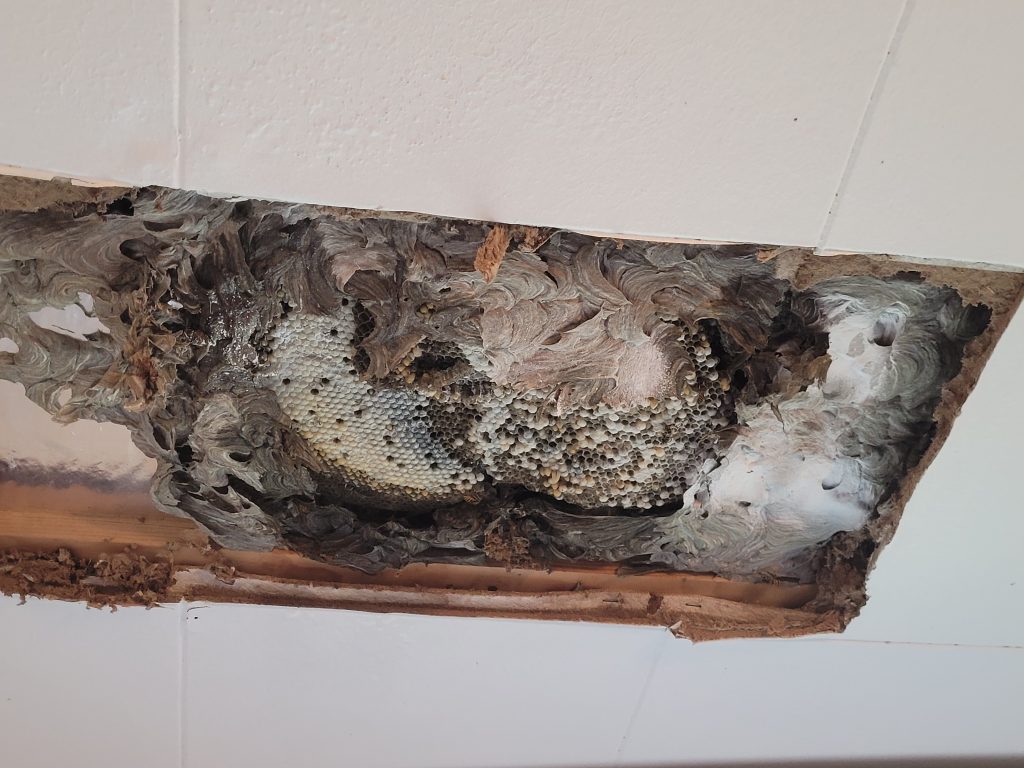
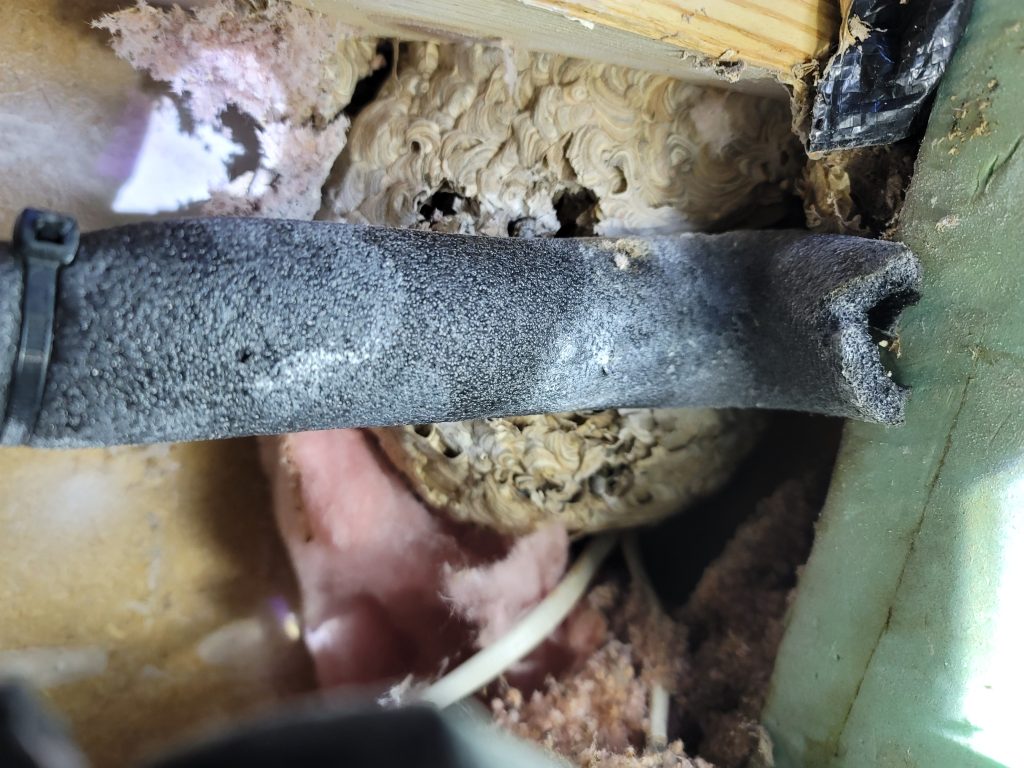
Eastern Yellowjacket (Vespula maculifrons) and German Yellowjacket (Vespula germanica) are the primary species. Both build enclosed paper nests and are highly defensive. Eastern yellowjackets frequently nest in the ground, in old rodent burrows, and inside wall voids. German yellowjackets more commonly nest inside structures — attics, wall voids, crawlspaces — and are considered more aggressive.
SIGNS OF A YELLOWJACKET NEST
- A consistent stream of yellow and black wasps entering and exiting a single point (a ground hole, weep hole in brick, gap in siding, or soffit opening)
- Increased yellowjacket activity around trash cans, outdoor dining areas, or sweet food sources in late summer
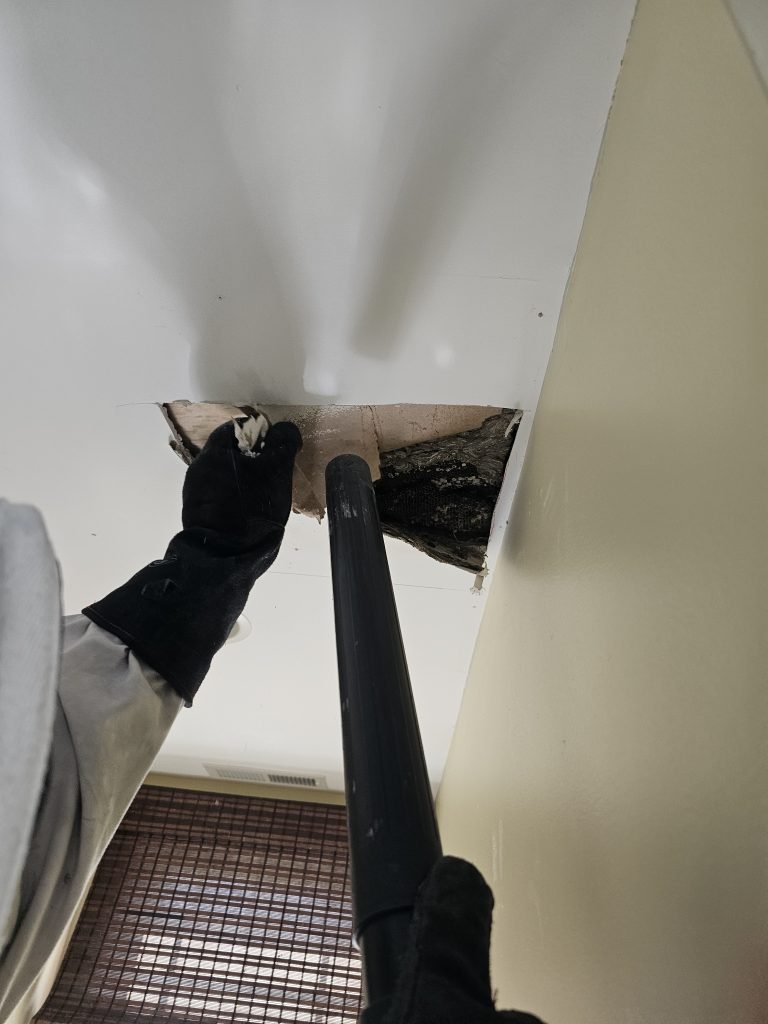
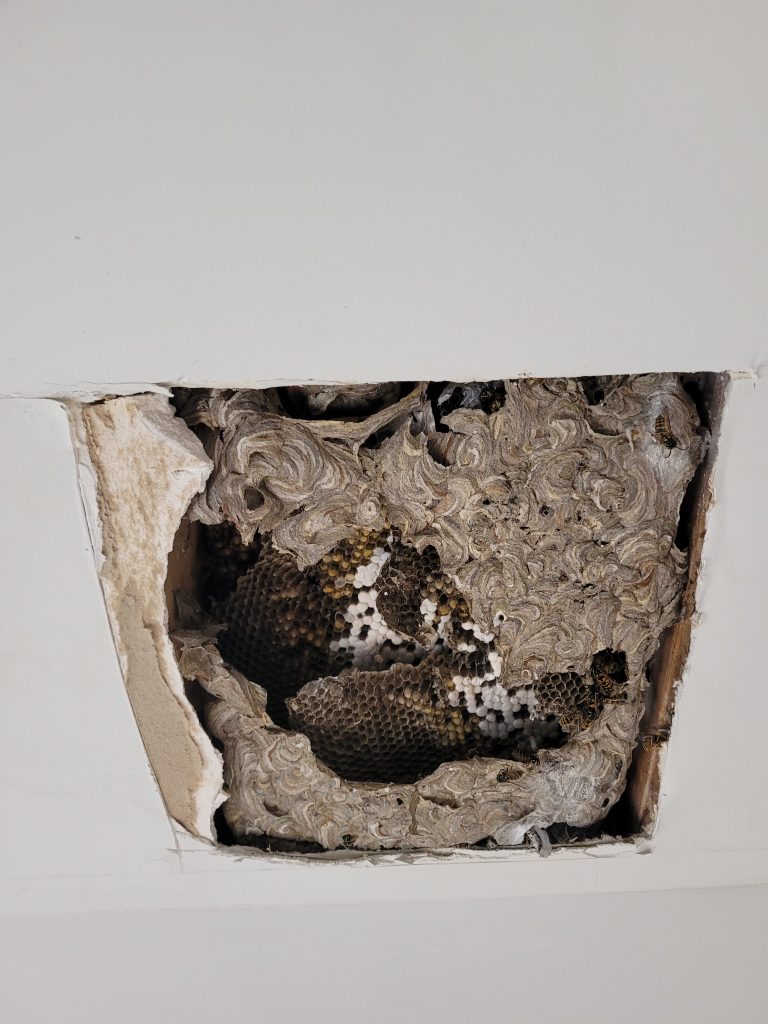
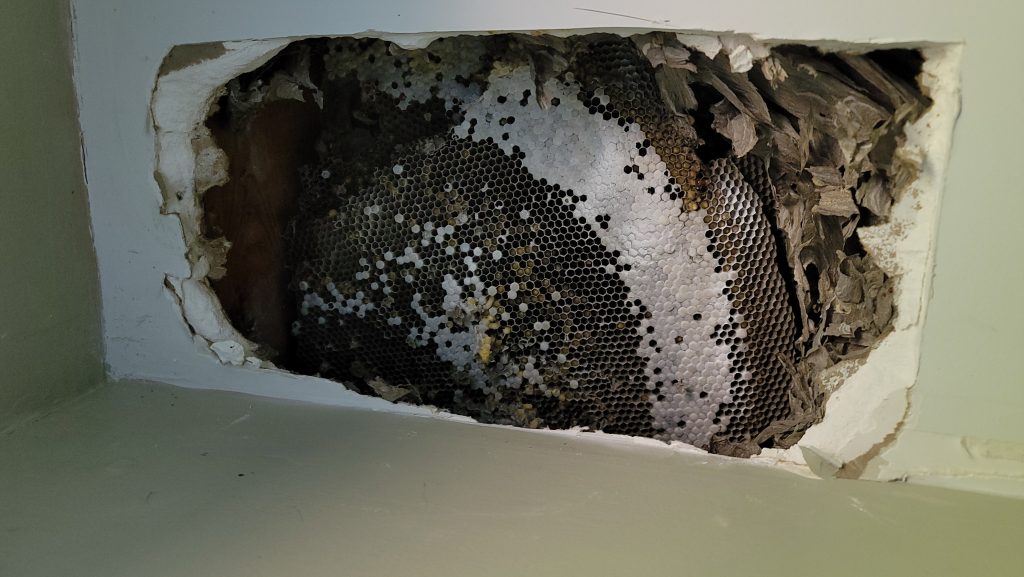
- Yellowjackets chewing through drywall from inside a wall void
- A papery buzzing sound inside walls
COMMON NESTING LOCATIONS IN WV HOMES
- Abandoned rodent burrows and ground voids
- Inside wall cavities, especially near the foundation and around window frames
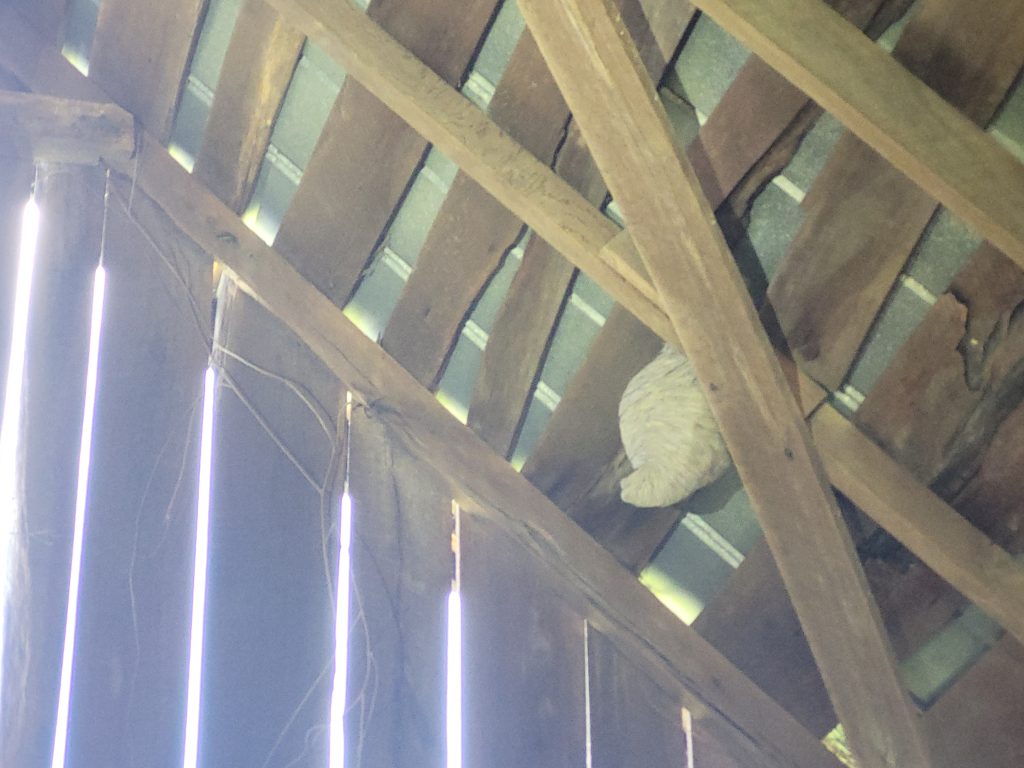
- Attic spaces — particularly near gable vents
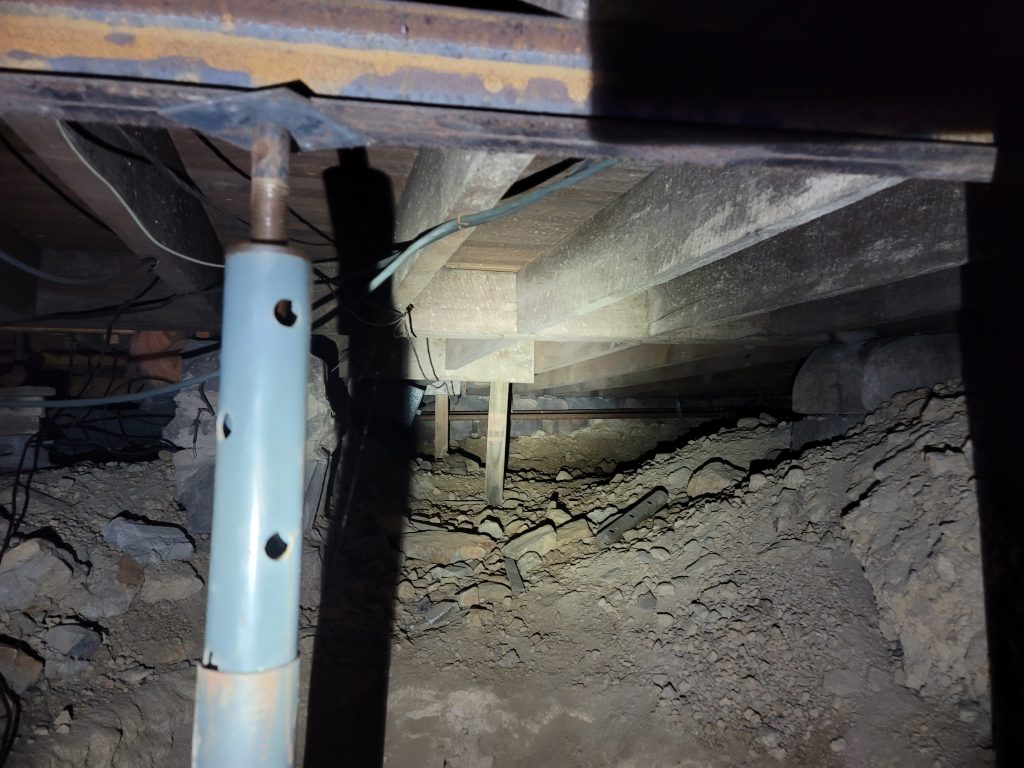
- Crawlspace interiors
- Hollow trees on the property
- Dense grass or sod — nests can be triggered when mowing
HOMEOWNER PREVENTION TIPS
1. Inspect the perimeter of your foundation each spring for ground-nesting activity — colonies are easier to treat when small.
2. Seal gaps in siding, around windows, and in the roofline before spring.
3. Keep trash cans tightly sealed and move them away from sitting areas — late-season yellowjackets are highly attracted to sugars and proteins.
4. Never block a yellowjacket nest entrance without treating first — this causes workers to chew through interior walls to escape.
5. Never attempt to flood or plug a ground nest yourself — it almost always results in mass stinging.
6. If you discover yellowjackets inside a wall, do not seal the entry point — call for professional treatment first.
HOW WE TREAT YELLOWJACKETS
Pest Control WV treats yellowjacket nests with residual insecticide dust or liquid applied directly into the nest entrance. For wall void and ground nests, this must be done carefully to prevent workers from escaping into the living space. Treatment is performed at night when foragers have returned and the entrance is less heavily guarded. A follow-up inspection confirms colony elimination before any entry points are permanently sealed.
Some examples of Other Wasps & Hornets covered
- Paper Wasps (Polistes spp.): Slim, narrow-waisted, and often brown or yellow. They build open-comb, umbrella-shaped nests under eaves, porch ceilings, and in sheds.
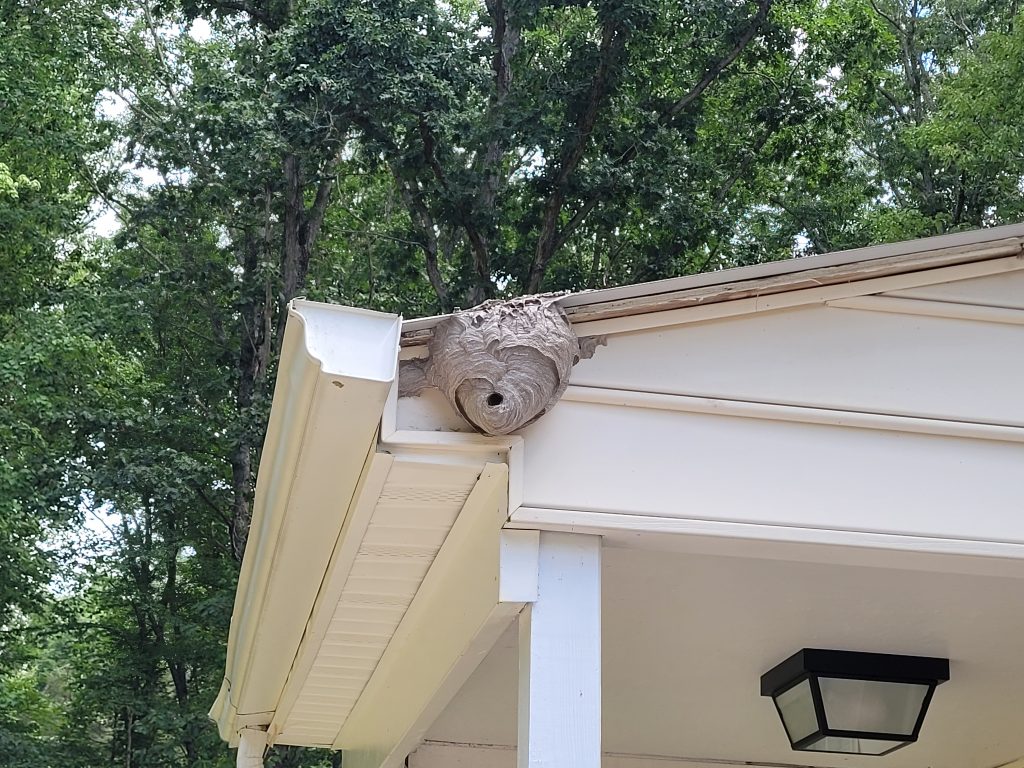
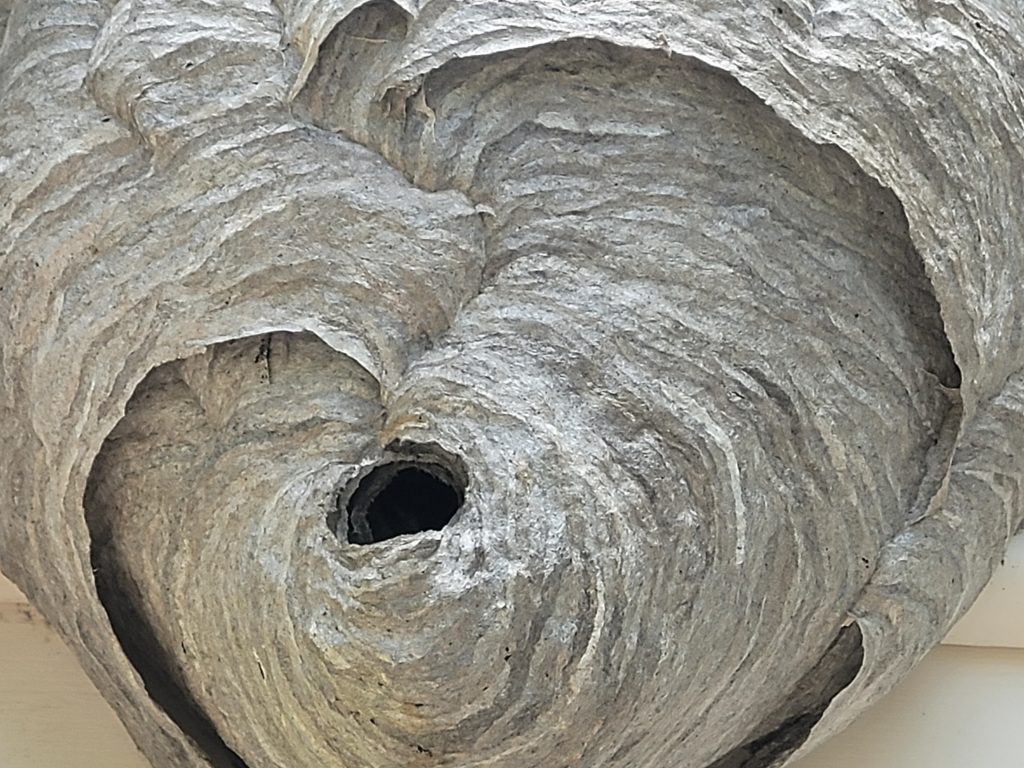
- Bald-faced Hornets (Dolichovespula maculata): Black with white markings on their face and body. They build large, papery, hanging nests in trees or shrubs and are highly aggressive when defending their nest.
- European Hornets (Vespa crabro): Large, brownish hornets with yellow stripes, often active at night and attracted to lights. They build nests in hollow trees or dark, protected areas.
- Eastern Cicada-killer Wasp (Sphecius speciosus): Very large, solitary wasps (up to 1.5 inches) that resemble massive yellowjackets. They burrow into lawns and are generally non-aggressive toward humans.
- Mud Daubers: Solitary wasps that build small, tube-like, or round nests out of mud on buildings. They are non-aggressive and rarely sting.
Some examples of areas covered
- Pest Control in Residential Homes
- Pest Control In Air BnB and Rental Homes
- Pest Control in Apartments and Multi-Unit Housing
- Pest Control In Care Homes and Medical Facilities
- Pest Control in Club Houses and Halls
- Pest Control in Convenience Stores and Quick Service
- Pest Control in Courthouses and Government Buildings
- Pest Control In Factories and Warehouses
- Pest Control in Firehouses and Police Stations
- Pest Control in Food Production and Service
- Pest Control in Funeral Homes and Places of Worship
- Pest Control in Offices and Public Buildings
- Pest Control in Shopping Plazas and Storefronts
- and more...
Did You Know?
There are more than 30,000 species of wasps around the world. Most people know about the top 3 categories we put them under, Paper wasps, Yellow-Jackets, and Hornets. Well, the first two are wasps...which you may find under the eaves, or in your walls, or crawls. However as for Hornets here in West Virginia, we only have one true hornet, the European Hornet. The Bald Faced Hornet, is actually a species of Yellow-Jacket, with white markings rather than yellow and a longer body.
Free Inspections! Get Rid of Yellowjackets Today!
Pictures of Yellowjacket Nests